

Modern manufacturing relies on precision, repeatability, and efficiency. Whether you're producing a single prototype or thousands of parts, today's cutting technologies all begin the same way – with a digital design and a computer-controlled machine.
However, it can be tricky knowing which cutting process is the best for your material. Here we’re going to break down the differences between three popular methods: CNC cutting, laser cutting, and waterjet cutting. They can all produce a finished part, but they're not interchangeable.
Here's how to think about each one.
CNC Knife Cutting
CNC (Computer Numerical Control) cutting uses a computer-guided knife to cut material with precision and repeatability. It's our most versatile process and handles nearly everything we work with, up to 75mm thick.
That said, density matters. Very dense material limits how complex a shape can be – the knife struggles to make clean edges and tight turns once thickness and density are both high. On the other hand, CNC is a great fit for denser foam. Too many open channels in a low-density foam can be a problem. The vacuum table that holds material in place during cutting may not be able to hold the foam down, and it can shift mid-cut.
Best for: Most felt, foam, and cork parts up to 75mm thick, including complex shapes in mid-to-high density material.
Laser Cutting
Laser cutting uses a focused beam to cut or engrave material, and it's excellent for intricate detail – but it comes with more material restrictions than CNC knife.
- Wool: We usually don't laser-cut wool. The process produces a strong odor along with charcoal residue on the edge. We can, however, laser engrave wool by adjusting the laser strength to avoid these issues. The material still needs to be cleaned afterward and run through a dedicated ozone chamber to remove any remaining smell. Wool blends may be possible to cut depending on how much wool is in the material, and we'll evaluate those on a case-by-case basis.
- Synthetics: We can laser cut most synthetic materials, but only when they're under a quarter inch. Thicker synthetic material increases the risk of cutting errors and accidental melting. One exception is PVC, which we don't laser cut due to the health and safety risks of the fumes it releases. For any other synthetic, we'll review the specific material for health and safety considerations before starting the project.
- Foam: Foam isn't recommended for laser cutting. It carries an ignition risk, along with the same health and safety concerns as other materials that release fumes when heated.
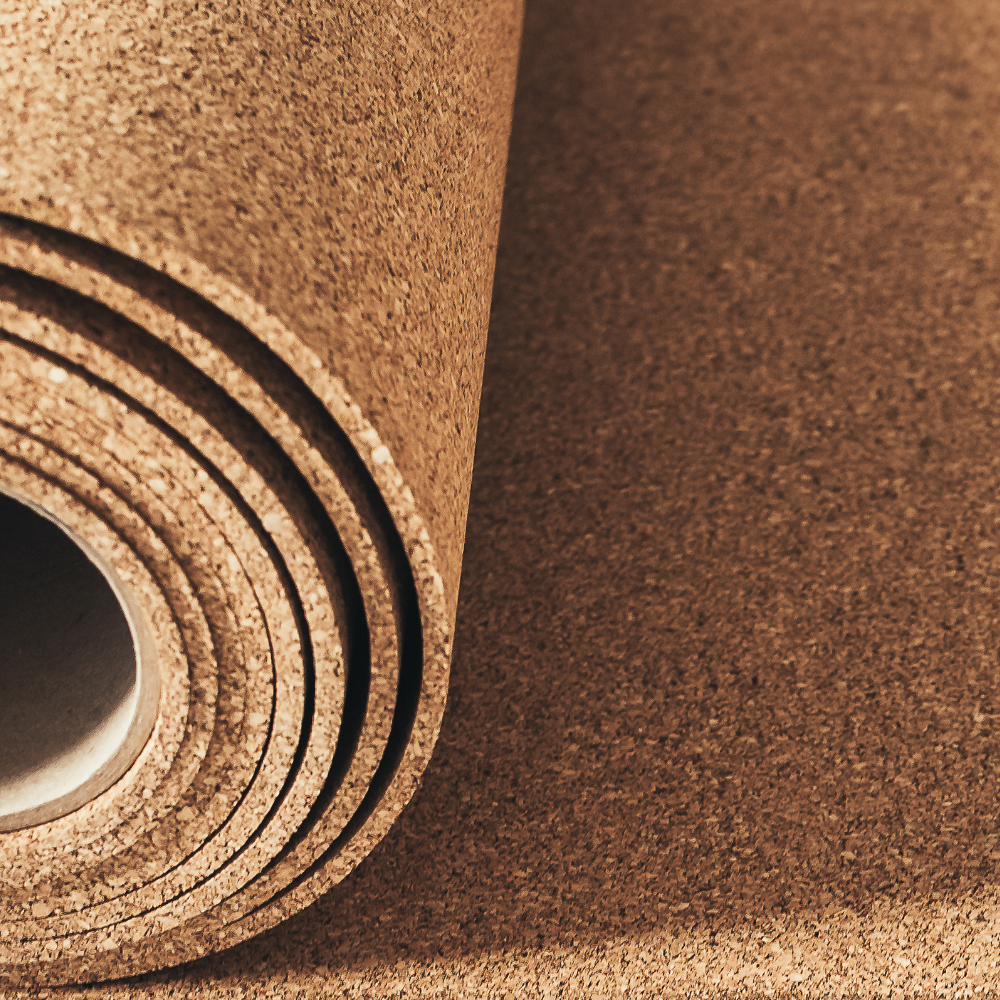
- Cork: Laser cutting cork is possible but not ideal — the heat tends to darken (brown) the edges, so you don't get as clean a finish as with other methods.
Best for: Thin synthetic materials and detailed engraving work, including wool engraving where cutting isn't an option.
Waterjet Cutting
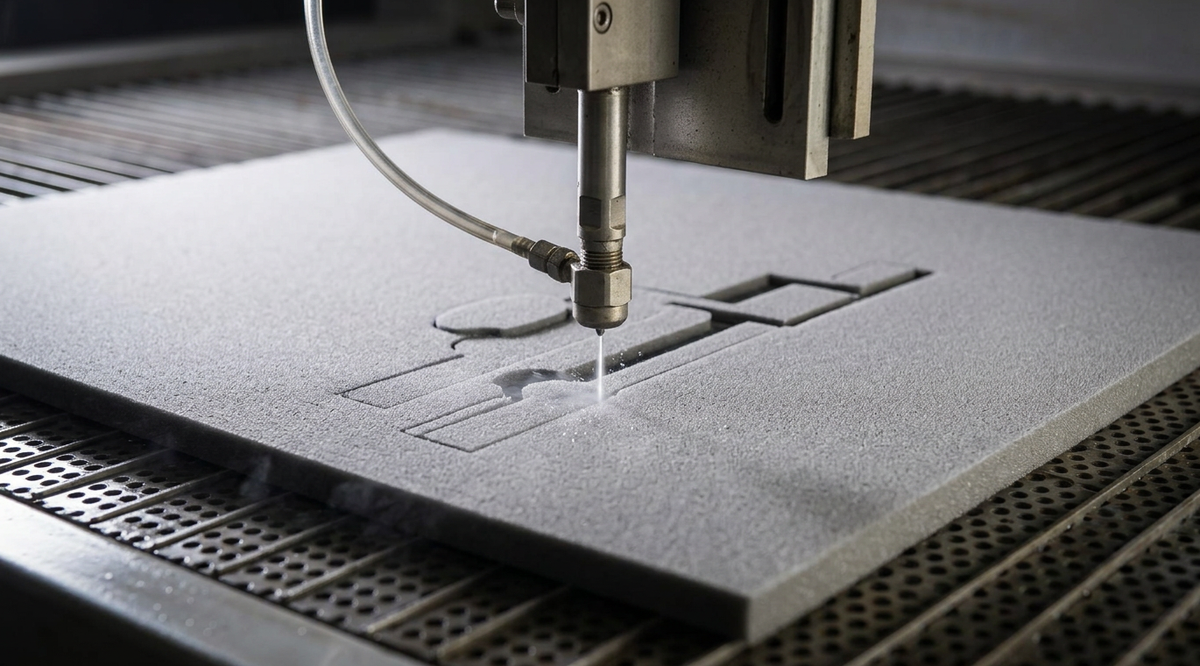
Waterjet cutting is used when the material is too hard or thick to cut with a blade or laser. Highly pressurized water is released through a hole in a gemstone (usually diamond, ruby, or sapphire). Hard materials like glass or stone require garnet sand as part of the water stream.
However, for materials such as high density felt, dense foams, and cork, only high-pressure water is used. This means sand doesn’t have to be cleaned off the material and it doesn’t damage it in any way
Waterjet is the go-to option when material is too thick for CNC or laser to handle. It also has a density requirement: material needs to be above 0.32 g/cm³. Below that density, the waterjet will still cut through the material, but the edges won't be neat or sharp.
Waterjet isn't suitable for every material. It should be avoided for materials that swell when wet, material that shouldn’t be exposed to liquid, or lower-cost materials where the process isn't cost-effective. These could be low-density wools, cheaper synthetics, and absorbent materials.
Best for: Thick, dense material (above 0.32 g/cm³) that's beyond the capacity of CNC or laser cutting.
Which One Do You Need?
In short: CNC Knife Cutting is our workhorse for most jobs and complex shapes; laser is best reserved for thin synthetics and fine detail or engraving work, and waterjet steps in when material is too thick or dense for the other two.

Not sure which process fits your material and shape? That's exactly what our team is here for. Contact us and we'll help you figure out the right approach before you commit to a full production run.