




Short answer: Yes, if your wool meets our criteria!
It’s one of the most common questions we hear from farm owners, and today, we’re taking some time to answer it.
Some fiber is ready to work with. Some needs blending first. And some aren't a good fit for our equipment. This post explains what we are looking for, so you can see where your fiber stands before you get in touch.
Fibers We Work with
We are able to run most natural fibers such as sheep wool, mohair, bison or buffalo.

We consider other fibers case by case, so if you have something different, just ask.
A Quick Checklist
Your fiber is likely a good fit if:
- It's a fiber we work with
- It has been scoured and washed, with the lanolin removed
- It's about 50–75 mm (2–3 in) long
- You have enough for a minimum run of about 1,000 lb. (this can include wool we blend in)
- You can plan for six to ten weeks of production time
Preparing Your Fiber
This is the first thing to check. Fiber straight off the animal contains lanolin, dirt and plant matter. We can't process it in that state.
Your fiber needs to be scoured and washed, with the lanolin removed, before it reaches us. If your fiber is still raw, plan this step early.
What about carbonizing?
Carbonizing is a treatment used to remove stubborn plant matter from wool. It’s not always necessary, and we don’t do it at our facility. Whether it’s needed depends on the amount and type of vegetable matter present in the fiber.
For most farm-sourced fiber, thorough scouring and washing will suffice. If your fiber contains a significant amount of stubborn plant matter, let us know so we can determine whether it’s suitable for our process.
Fiber Specification: What Our Carding Line Needs
Before fiber becomes felt, it goes through our carding line. Carding opens up the fibers and lines them up. The carding line sets the specification your fiber needs to meet.
Length: 50–75 mm (2–3 in). Fiber that's too long wraps around the card cloth. Fiber that's too fine falls out as dust. A workable batch needs a mix of long and short fibers. All one length won't run well.
Fineness: measured in microns. A micron is one thousandth of a millimeter. The lower the number, the finer the fiber. For each type of wool, the accepted micron range differs.
Don't know your fiber's length or micron count? That's fine. Tell us what you do know, and we can take it from there.
Why We Often Blend Your Fiber
Not every fiber can run on its own. Alpaca is too fine and bison is too coarse. If your fiber doesn't meet the carding spec by itself, we blend it with our own wool.
We choose the blend based on what you want to make. For example, products that touch the skin need finer wool.
Our goal is always to use as much of your fiber as possible.
Minimum Run Size
Our minimum run is about 1,000 lb. of blended fiber.
Before a run, we spend two days cleaning and setting up the line. After the run, we spend another two days cleaning it. That's four days of preparation for one day of production.
On a small job, that preparation time makes the cost per pound very high. A run of around 1,000 lb. makes the numbers work.
The Process: From Fiber to Felt
- Consultation: Share the fiber type, how much you have, whether it's washed, and what you'd like to make. Length and micron details help if you have them.
- Blend: We suggest a blend ratio based on your fiber length, micron count and end use.
- Sample: We make a sample in our lab. We card the fiber by hand or with a quick pass on the carding line, then run it through the felting machine. Your sample is ready within days.
- Approval: You check the sample and confirm if it's right for your product.
- Production: A full run takes six to ten weeks.
Timing depends on what else is on the line. Jobs similar to the one before (ex. same colour, same settings) run faster. A colour change, such as grey after white, waits for a suitable slot.
What We Can Make with Your Fiber
Depending on your product, we can make:
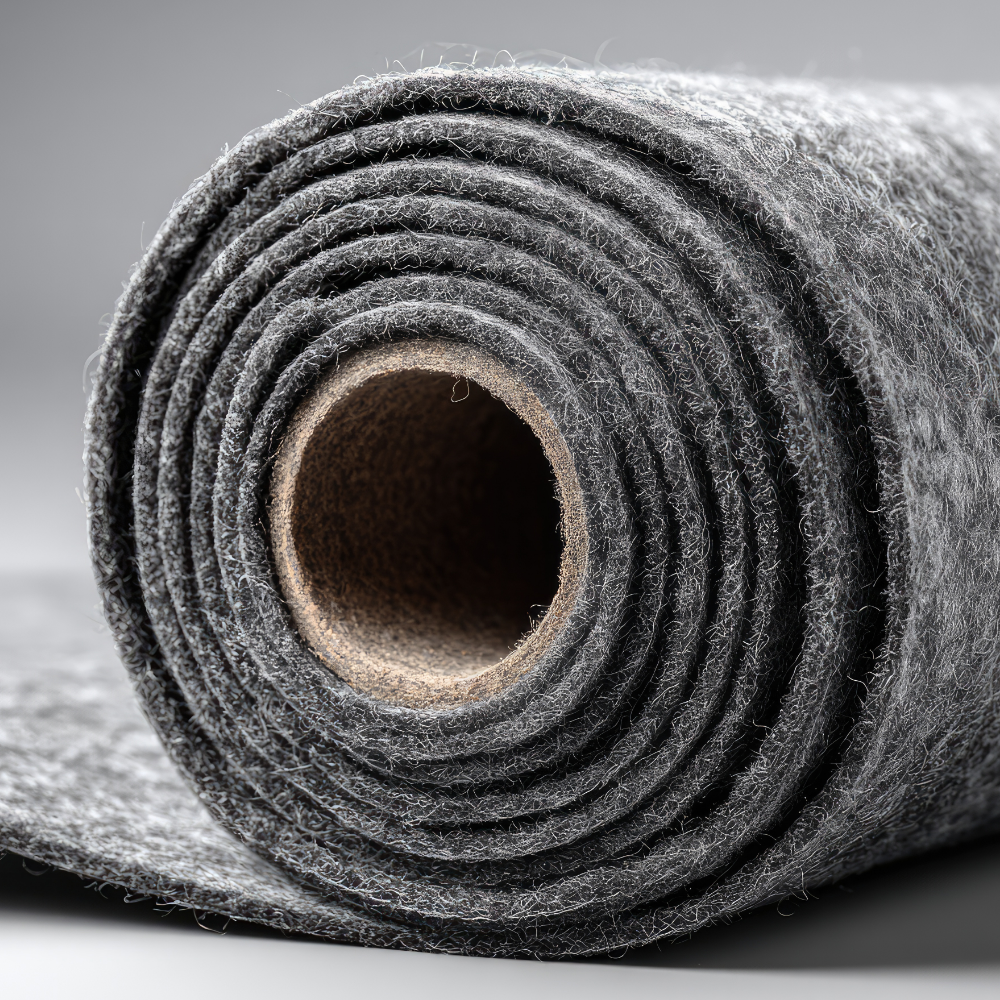
- Needle felt or pressed felt material or products
- Die-cut shapes such as insoles are especially popular
- Sheets up to 125 mm thick
- Rolled goods up to 35 mm thick
So, can we use your wool to make felt? If your fiber is clean and close to our spec, there’s a good chance we can.
The best way to find out is to talk to us!


