


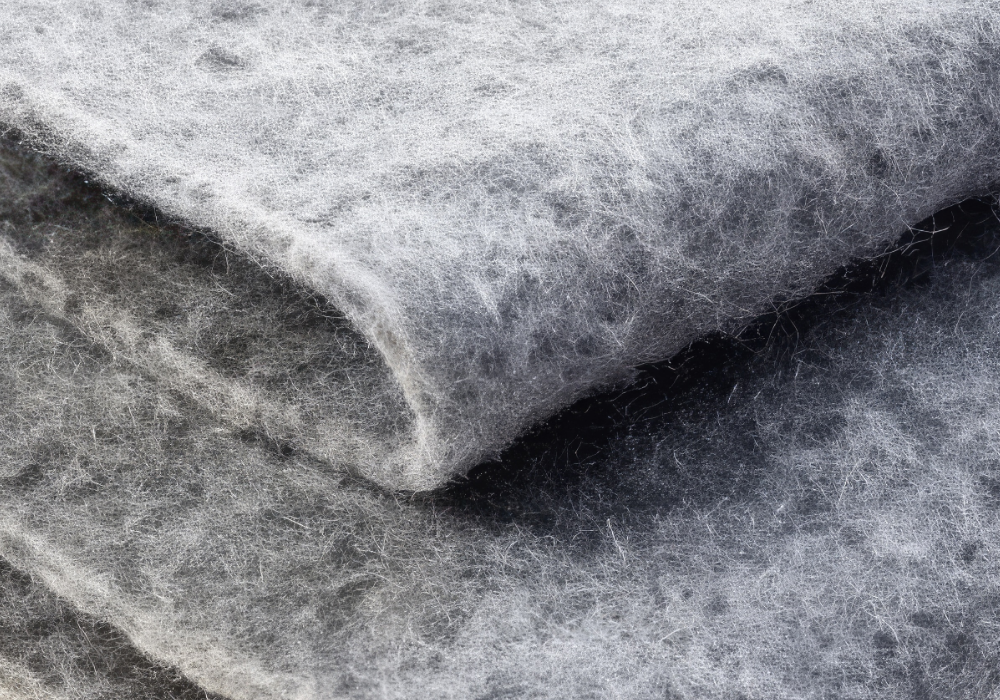
In a world filled with high-tech composites and engineered plastics, one material has quietly remained indispensable across industries for more than a century: felt. Durable, adaptable, and naturally resilient, felt is one of the few materials that can insulate, cushion, seal, polish, absorb, and protect, often outperforming more complex alternatives. At Brand Felt Group, we see firsthand how this timeless material continues to solve modern challenges.
Felt’s unique properties come from its structure. Unlike woven or knitted textiles, felt is a non-woven material made by matting and compressing fibers, commonly wool or synthetic fibers, into a dense, uniform sheet. This process creates characteristics that are nearly impossible to replicate with other materials:
- Impact and pressure absorption - Felt compresses under load and rebounds without cracking or tearing, making it ideal for vibration damping, machinery seals, and protective padding.
- Natural sound absorption - Felt’s fibrous structure traps sound waves, reducing noise in equipment, appliances, and architectural applications.
- Thermal insulation - Wool felt naturally regulates heat, making it useful for temperature-sensitive equipment or protective barriers.
- Oil and liquid retention - Industrial wool felt can absorb and slowly release oils, enabling effective lubrication wicks, gaskets, and seals.
- Clean, non-abrasive polishing - Dense felts are essential in glass, metal, and stone polishing processes, where consistency and durability are key.
One Material, Countless Industrial Uses
- Manufacturing: seals, gaskets, vibration pads, washers, wicking components
- Automotive: polishing wheels, oil-retention pads, anti-squeak solutions
- Aerospace: cushioning, insulation, precision gaskets
- Construction: sound-absorbing panels, expansion joint fillers
- Glass and Stone Fabrication: high-density polishing wheels and blocks
- Furniture and Packaging: protective pads, liners, custom inserts
Wool the Miracle Fiber
Wool’s natural fiber structure makes it possible to produce felt in an incredibly wide range of densities—from soft, porous sheets to thick, rock-hard industrial grades. Its microscopic scales and natural crimp allow the fibers to interlock tightly under pressure, so manufacturers can compress wool into dense, rigid felt for polishing wheels, heavy-duty seals, and structural components, or leave it more open and flexible for cushioning, sound absorption, and filtration. Wool also absorbs and retains oils for controlled lubrication, withstands heat without melting, dampens noise and vibration, and rebounds well under load—all while remaining durable and long-lasting. These combined properties give engineers precise control over thickness, firmness, and performance, making wool felt one of the most versatile industrial materials available.
Even as industries evolve, felt continues to prove its value. Its combination of strength, flexibility, sustainability, and adaptability makes it a rare material that works in both heavy-duty environments and precision applications.