

Hundreds of feet above the ground, inside a wind turbine, gearbox transmits rotor power that turns the blades. The blades endure cold and heat, rain, air, and dust. The less they have to stop for maintenance, the better.
When metal gears turn, they need reliable lubrication on every tooth. As the gears turn, their teeth also pick up dust, grit, and tiny metal particles worn from the gear surfaces. Traditional maintenance could include stopping the wind turbine and sending technicians to clean or replace gear parts.
So, how do we increase the life of a gear without expensive downtime and replacement parts?
The answer may surprise you: high density wool felt.
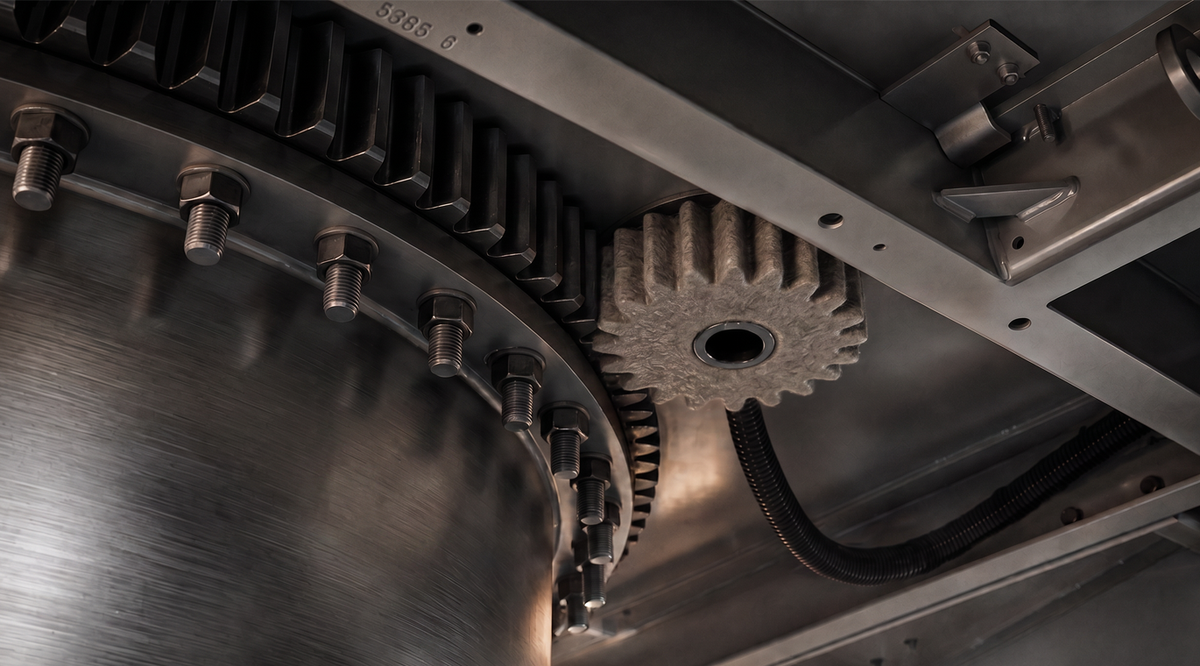
Specifically, a gear cut from high-density wool felt that runs alongside the steel gear to both lubricate and clean it. Here’s how it works!
A felt gear meshes against the gear rack as an idler. It’s saturated with lubricant, often fed continuously through a central pin. With every rotation, it does two things at the same time:
It lubricates: Each tooth of the felt gear lays a fresh, even film of lubricant onto the steel teeth it contacts.
It cleans: It wipes away old lubricant, dirt and metal particles, pulling them into the felt and away from the working surfaces of the gear.
When a felt tooth presses against a metal tooth, the pressure squeezes the felt and lubricant flows out. As the contact eases and the felt recovers, it draws liquid back in, along with the old lubricant, dirt and debris sitting on the steel surface.
Instead of a full lubricant change, operators simply swap the felt gear on a schedule, typically around every three months.
Felt gears are made in off-white wool, so the contamination they collect is easy to see. A gear that comes out far dirtier than usual is an early visual warning that something inside the turbine may need attention, well before it becomes a costly failure.
Why Wool? It Starts with Fiber
To understand why a wool gear performs this job so well, you have to look closely at a single wool fiber.

Wool structure aids lubrication
Under a microscope, the outer layer of a wool fiber, called the cuticle, looks like shingles on a roof. These shingles, or scales, are all pointing toward the tip of the fiber. When matted together, these fibers interlock, making felt.
The spaces between these tightly packed wool fibers form a vast network of tiny channels that can hold and distribute lubricant. Some coarser wool fibers also have a hollow core, which can provide additional space for lubricant to be held. As the wool gear rotates against the metal surface, pressure at the point of contact helps release lubricant from the felt onto the metal gear, where it forms a lubricating film.
Wool structure aids cleaning
The same dense, interconnected fiber structure that holds lubricant also helps capture contaminants. As the felt gear contacts the steel gear, it picks up some of the dirt, grit, and worn metal particles suspended in the lubricant.
Because these particles are much larger than the spaces through which the lubricant moves, they can become trapped deeper within the felt. The felt essentially acts as a depth filter: contaminants are captured inside the gear while lubricant remains available at the working surface.
This helps keep the contact face of the felt gear cleaner, allowing it to continue delivering lubricant to the steel gear.
Does it Need to Be High Density Felt?
The short answer is, yes.
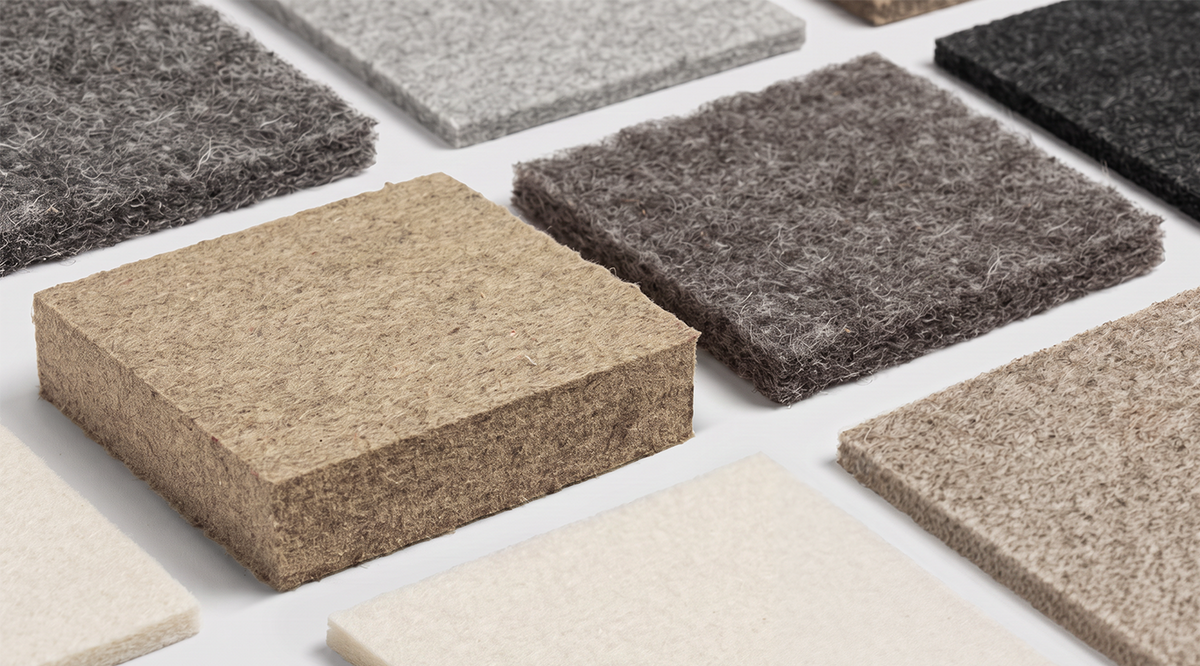
Not just any felt can do this job. A felt gear needs to hold precise tooth geometry, withstand constant contact and keep its shape through changing temperature and humidity. That calls for high-density felt, and the way that felt is manufactured matters as much as the wool that goes into it.
Let’s take a normal sheet of felt. Each sheet starts as thin layers of combed wool, and in each layer the fibers all point the same way, like brushed hair. When all the fibers point one way, the felt doesn't shrink evenly: it shrinks more in one direction than the other.
We fix this by cross-laying. The layers are stacked like plywood, with each layer oriented in a different direction from the one below. Because the fibres point in different directions, the material shrinks more evenly during felting and holds its shape. The stack is then pressed and pounded until the fibres lock tightly together.
This felt is:
- Dimensionally stable, so gears don't lose shape
- Uniform in density, so lubricant is delivered evenly
- Finely porous, which strengthens capillary action
- Tough enough to undergo continuous contact
Felt Gears Custom to Machines
Felt gears aren't one-size-fits-all. They often lubricate rack-and-pinion drives with liquid fed from the center. Those gears are drilled with holes so the lubricant can escape more easily. This is customized based on the requirements.
We offer both straight felt gears and angled felt gears, with angled gears available in left-hand and right-hand configurations. We can customize density, size and number of teeth, off-white or gray, to suit your gear system.
Contact our team to talk through your application.